Capacity and output
We list the watt-hour capacity and the continuous AC wattage for each unit. This helps you see if a station can run a refrigerator or just charge a phone.
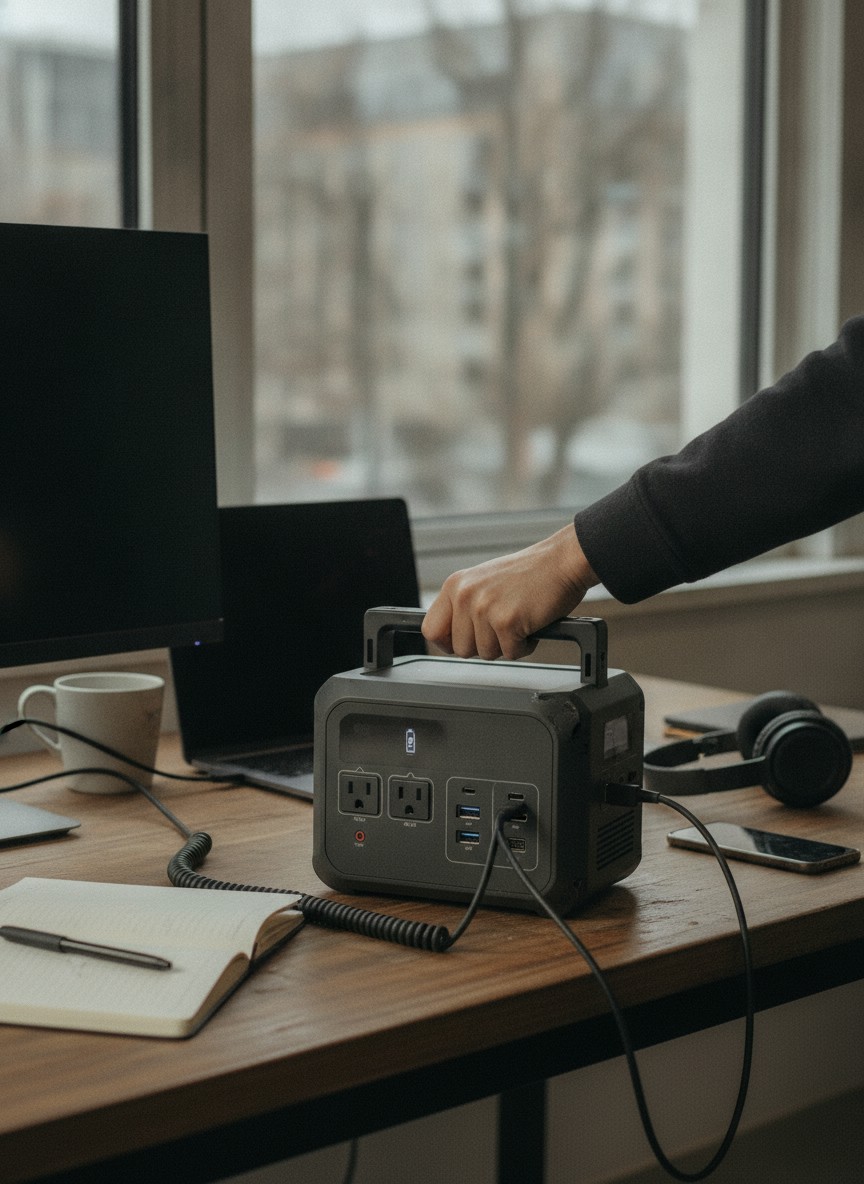
Finding the right battery depends on what you need to plug in and for how long. This guide explains the basic specs found in this catalog.
We group these power stations by their battery capacity, power output, and intended use to make it easier to compare different models.
We list the watt-hour capacity and the continuous AC wattage for each unit. This helps you see if a station can run a refrigerator or just charge a phone.
These listings highlight LiFePO4 models for those who want more charge cycles. We also note standard lithium units for lighter weight.
We track which units have AC outlets, USB-C PD ports, and DC outputs. This ensures the station fits the plugs on your specific devices.
Each portable power station gets a score out of ten. We put it together from a few simple things.
When a listing has its own public average rating, that number is the main thing we use.
If we have our own notes on a product, they still count a little toward the score.
More reviews nudge the score up, very few pull it down, and products that are often out of stock lose a little; if we have no average and no notes, we hide the number.
Capacity is measured in watt-hours (Wh) and tells you how much energy the battery holds. Output is measured in watts (W) and tells you how much power the station can pull at one time. A high-capacity battery might still have a low output, meaning it can charge a phone for days but cannot run a coffee maker.
Most stations in this set include AC outlets for standard plugs. Pure sine wave inverters are better for sensitive electronics like CPAP machines and laptops because they mimic the clean power from a wall outlet. Modified sine wave units are often cheaper but may cause issues with some motors or chargers.
Many units are sold as solar generators with panels included. If you plan to travel, look for compact units under 300Wh or those with TSA approval for air travel. For off-grid living, larger units over 2000Wh provide enough storage to run lights and appliances overnight.
Open a set, then two brand pages, and compare the listings
Portable energy for tents, campsites, and outdoor recreation
Standard wall-style plugs for household electronics and appliances
Lightweight units for charging phones, laptops, and small electronics
Entry-level AC output for laptops, lights, and mobile chargers
Backup units for storms and unexpected power failures
Batteries with long cycle life and high thermal safety
Emergency reserves to keep lights and essential appliances running
Units with the wattage and ports needed to charge notebooks
Mobile power hubs for van life and recreational vehicles
Portable stations optimized for multiple smartphone recharges
Kits featuring both the battery hub and matching panels
Clean AC output safe for sensitive medical gear and laptops