9.4
Browey 1600W peak emergency power station
Stations for camping Emergency power stations Stations for RV use Off-grid power stations 1200W to 2000W output stations
All-in-one designs featuring integrated solar cells on the chassis 7 power stations · 3 brands
9.4
Stations for camping Emergency power stations Stations for RV use Off-grid power stations 1200W to 2000W output stations
9.4
Stations for camping Emergency power stations Stations for RV use Off-grid power stations 1200W to 2000W output stations
9.3
Stations for camping Emergency power stations Stations for RV use Stations with solar panels included 1200W to 2000W output stations
9.3
Stations for camping Emergency power stations Stations for RV use Off-grid power stations 1200W to 2000W output stations
7.4
100W to 300W output stations With AC outlets Camping With DC outputs Emergency power stations
CPAP compatible power stations With DC outputs Emergency power stations Expandable power stations Refrigerators
With AC outlets With DC outputs Expandable power stations Home backup
It can over multiple days of strong sun, but it is slow. A 40W panel on a 1024Wh battery adds charge gradually. For a full refill in one day, a separate higher-wattage panel or a wall outlet works faster.
Not for trickle charging or small loads. The built-in panel handles those on its own. A separate panel helps when you want faster recharge or need to aim the panel at the sun.
Yes. The panel feeds the battery while the battery feeds the outlets. Small loads like lights or a phone can run on solar input alone in good sun. Larger loads drain the battery faster than the panel refills it.
It is part of the chassis, so it faces the same conditions as the rest of the station. There is no separate cover or folding frame. You treat the whole unit the same way you would treat any portable station left outside.
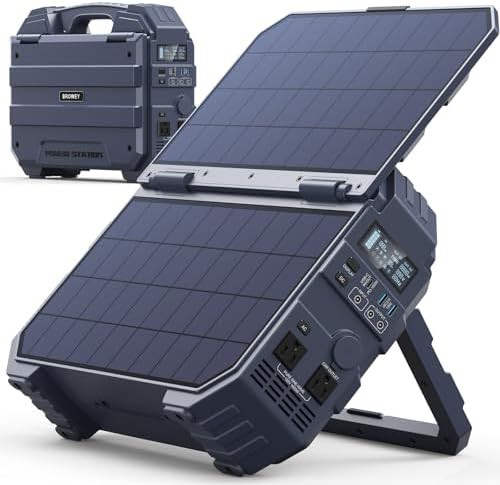
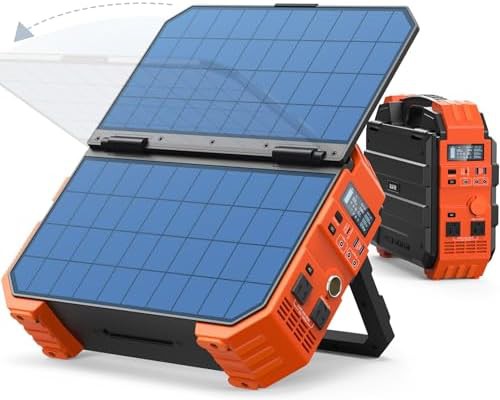
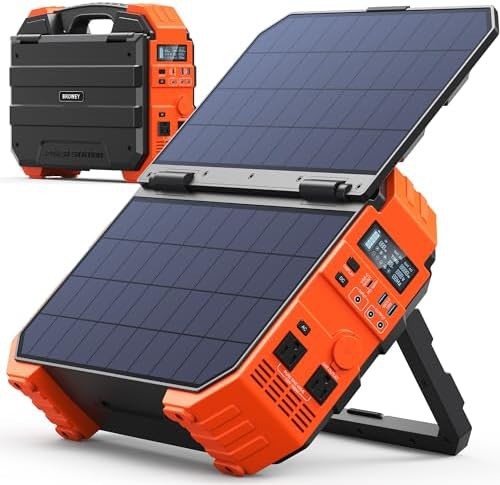
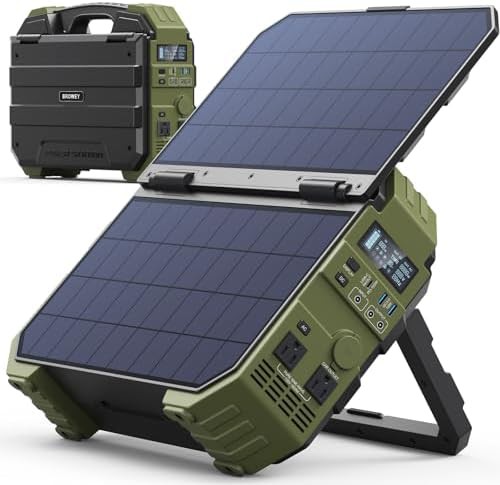
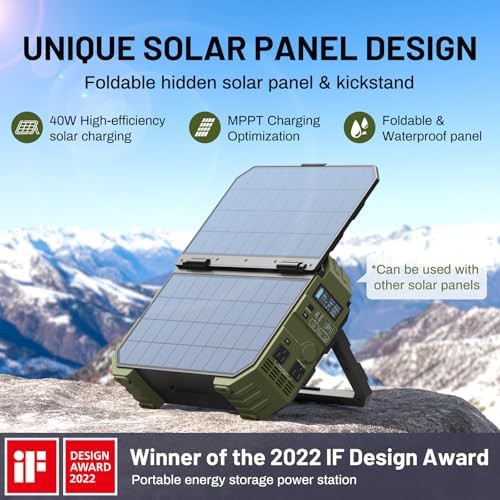
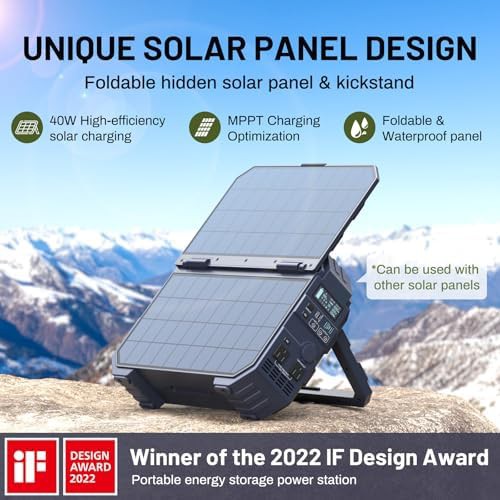
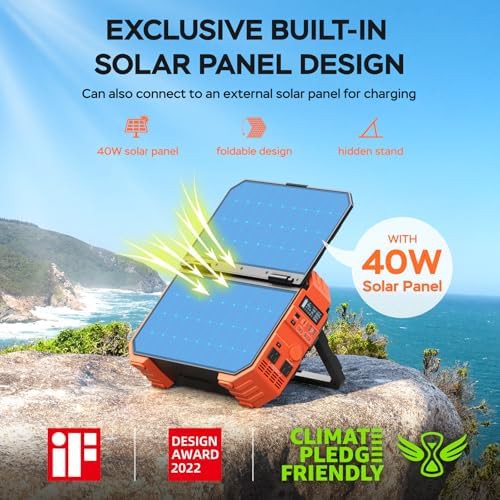
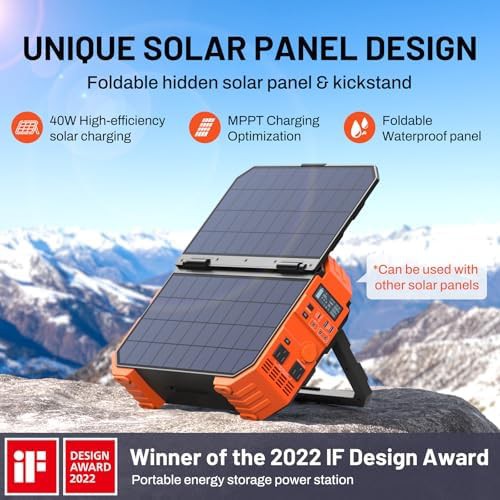
The solar cells sit on the chassis itself, so the panel and the battery share one body. A 1600W station can carry a built-in 40W panel, which trickle-charges the battery whenever light hits the unit. You do not unfold or attach anything to start a charge.
Because the panel is fixed to the shell, the station stays one piece to carry and store. The tradeoff is that the panel size is set by the chassis, not by what you might want to add later. A 40W panel on a 1024Wh battery is a slow top-up, not a fast refill.
These units still have the usual output set: AC outlets, USB ports, and a DC input for a separate panel or wall charger. The built-in panel works alongside those, not instead of them. You can leave it in the sun while running small loads.
A built-in panel keeps the battery topped up during long, sunny days at a base camp or in a truck bed. It is enough to offset standby drain and small loads like lights or a phone. It is not enough to refill a large battery quickly from empty.
For a 1024Wh battery, a 40W panel adds charge slowly across a full day of good sun. If you need the station full by evening, a separate higher-wattage panel or a wall charge does that faster. The built-in panel is a maintenance charger, not a primary recharge source.